Sewing machine service locally

Does anyone know where I could get a sewing machine looked at locally? We inherited my Mum’s really nice one, which my daughter would like to use, but it does not work properly. It could be that we are not threading it correctly, but basically, every time you try and sew anything the thread snaps out.
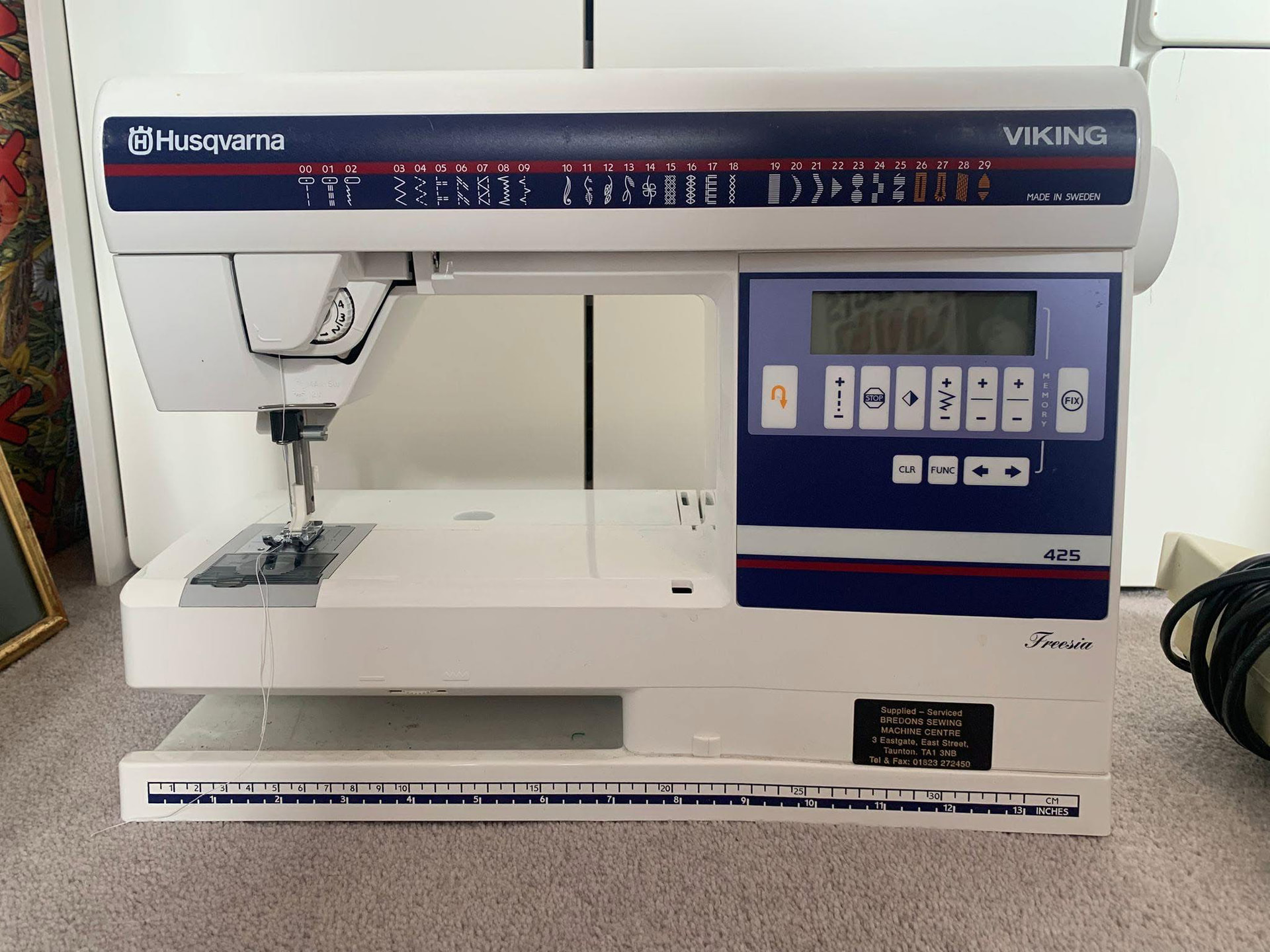
My in house expert says there’s probably a tension setting for the thread that could be set too high, but we don’t know the specific machine and how to change it

That sounds about right - maybe if I drop the manufacturer a line I will have some luck.

On a different local forum, however, someone has pointed me to The Workshop in Brockley, which has an arrangement with a sewing machine repair place, who collect and deliver machines to them on a Wednesday. So I’m hoping they’ll take a look and advise whether we’re doing something silly, and take it in for service if not.

The Husqvarna Viking Freesia 425 is a fantastic computerized machine known for its reliability. Because it has an “Automatic Tension” system, you shouldn’t have to adjust the dial often, but even the best machines need a manual tweak when you change fabric types.

Standard Settings for the Freesia 425

On the Freesia 425, the tension dial is located on the top left of the machine.

  • Normal Sewing: Set the dial to 4. This is the “neutral” zone for most 50wt threads and standard quilting cotton.
  • The “Green” Range: You’ll notice a line or marking between 3 and 5. This is the recommended range for the vast majority of your utility sewing.
  • Decorative Stitches: If you are using the built-in decorative or satin stitches, drop the tension slightly to 3 or 3.5. This prevents the bobbin thread from showing on the top of the fabric.

Common Freesia 425 Issues

If your tension feels “off” despite being set to 4, check these machine-specific quirks:

  • The Tension Disc “Click”: When threading the Freesia, you must ensure the thread is pulled deeply into the tension discs. Raise the presser foot before threading; this opens the discs so the thread can seat properly. If you thread with the foot down, the thread will sit on top of the discs, causing massive loops on the bottom of your fabric.
  • The Bobbin Sensor: The 425 can be sensitive to lint. If your tension is inconsistent, remove the stitch plate and use a brush to clear out the bobbin area. A tiny piece of lint in the bobbin tension spring can mimic a top-tension problem.
  • Self-Lubricating Bearings: These machines generally do not require oiling in the traditional sense, but they do love a clean bobbin race.

Quick Diagnostic

Observation Solution
Straight stitch looks like a “bead” on the bottom Increase top tension (move toward 5 or 6).
Top thread snaps or fabric bunches Decrease top tension (move toward 3 or 2).
Bobbin thread is visible on the top Decrease top tension OR check that the bobbin is wound evenly.
1 Like

That’s great - thanks for your help

2 Likes